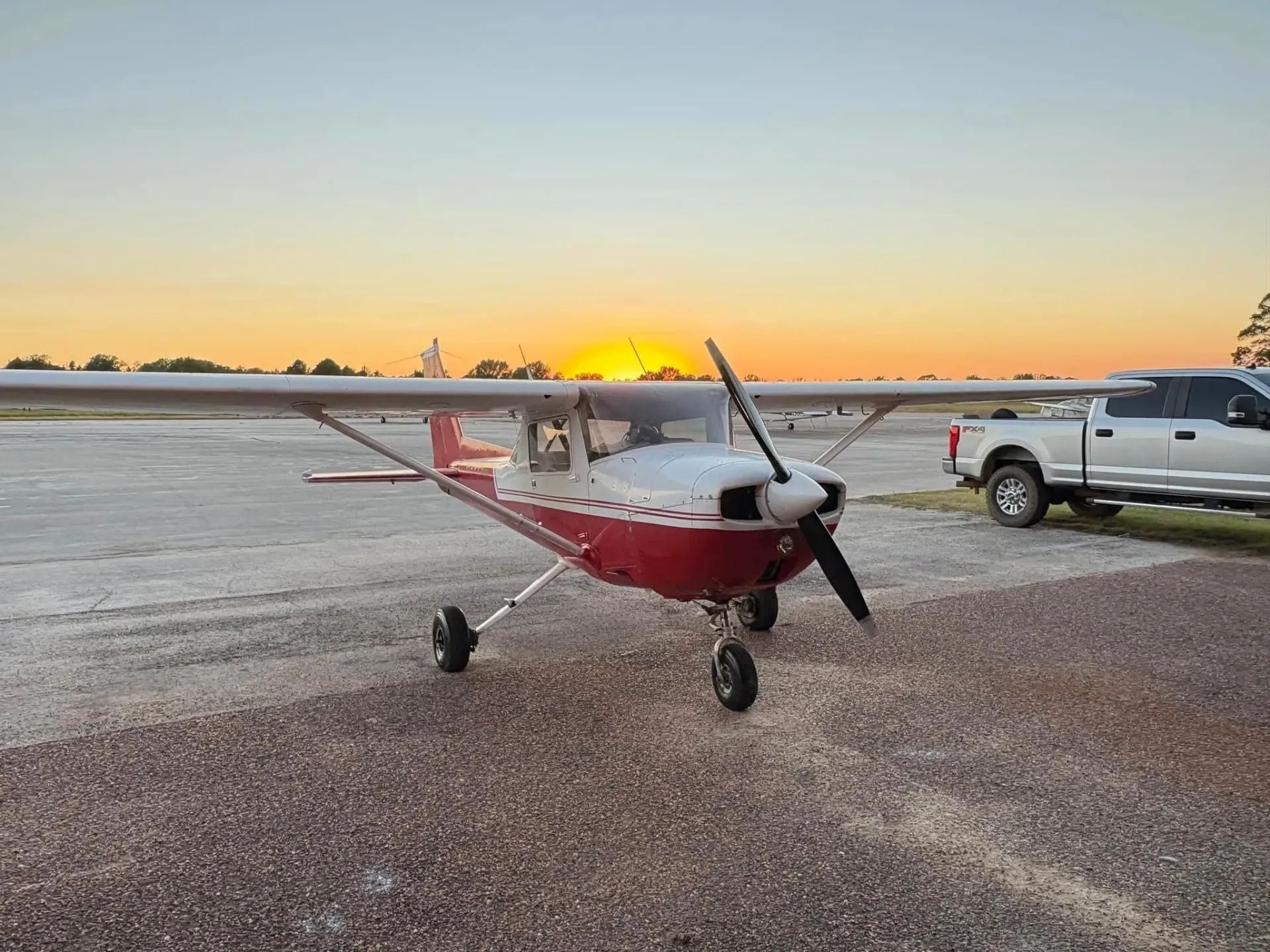
Cessna 150
The Cessna 150 was manufactured by the Cessna Aircraft Company
from 1958 to 1977. It is designed as a high-wing monoplane with a tricycle landing gear configuration, which makes
it easier for students to handle during takeoff and landing. Its compact
design and forgiving flight characteristics make it one of the most
popular training aircraft ever produced.
Performance and Specifications
- Seats: 2 (pilot and passenger)
- Engine: Typically a Continental O-200, producing about 100 horsepower
- Cruise Speed: Approximately 100–105 knots (115–120 mph)
- Maximum Speed: Around 124 knots (143 mph)
- Range: Approximately 400–500 nautical miles, depending on fuel load and conditions
- Service Ceiling: Around 14,000–15,000 feet
- Fuel Capacity: About 26 gallons usable fuel
- Takeoff Distance: 1,070 feet over a 50-foot obstacle
- Landing Distance: 1,335 feet over a 50-foot obstacle
Uses
The Cessna 150 is primarily used for:
- Flight training: Its stability and forgiving controls make it excellent
for student pilots. - Personal recreation: Suitable for short cross-country flights and local flying.
- Aerial observation: It can also be used for photography, patrol, or
survey operations due to its high-wing design providing unobstructed downward views.
Advantages
- Simple and cost-effective to operate and maintain
- Low fuel consumption compared to larger aircraft
- Durable airframe with long service life
- Easy handling for new pilots
Considerations
- Limited seating and payload (only two occupants)
- Basic avionics in older models; modern upgrades may be needed
for IFR flight - Not suitable for long-distance travel or high-speed operations
In summary, the Cessna 150 remains a classic and enduring choice for
flight training and light personal aviation due to its reliability, safe
handling characteristics, and relatively low operating costs. It is often
compared with its successor, the Cessna 152, which features slightly
more modern improvements while maintaining the same core design
principles.